
EXERCISING WITH MS:
The Complete Guide
Exercise—strength and aerobic—consistently has demonstrated across-the-board improvements in quality of life for MSers, but there's much more to this than a better QOL. While strength and core training can help with everything from better balance to less fatigue to improved muscle tone, new research suggests that cardiovascular exercise in particular may have a positive effect on the disease itself.

Aerobically fit MSers tend to have less brain atrophy and fewer cognitive issues. Best of all, researchers have found regular exercise actually lowers fatigue and may even be neuroprotective. Current research all points to one powerful conclusion: regular exercise is critical to managing multiple sclerosis. This guide details precisely how to get fit with a chronic illness.
How important is it to exercise if you have multiple sclerosis? Hugely. One leading MS researcher put exercising on the same level as taking a disease modifying therapy. It is more important than virtually anything else that you can personally do to manage your multiple sclerosis.
Pfft, we all know exercise is helpful. According to the National Center on Physical Activity and Disability: “In addition to improving overall health, cardiovascular fitness, range of motion, and flexibility, exercise can help one increase energy, improve balance, manage spasticity, decrease muscle atrophy, and better perform activities of daily living.”
But when it comes to MS, exercising is proving to be a critical weapon in dealing with the effects and progression of our shared disease. Numerous studies have come out in recent years (I’ve posted abstracts of them all here) that show exercise is essential in preventing cognitive decline in those with MS, central in lifting depression and overall mood, integral in fighting the effects of fatigue, and may have a neuroprotective effect—perhaps even encouraging remyelination in MS.
ActiveMSers has compiled a comprehensive list—arguably the most complete and detailed on the internet—of the best multiple sclerosis exercises, fitness tips and workout advice based on recommendations from doctors, physical therapists, research studies, professional athletes and personal experience.
Let’s do this.
EXPLORE THIS GUIDE:
Official MS Exercise Recommendations
IMPORTANT: Consult with your doctor and/or neurologist before starting any exercise program.

OFFICIAL MULTIPLE SCLEROSIS EXERCISE RECOMMENDATIONS
In 2020, the National MS Society convened clinical and research experts in the fields of MS, exercise, rehabilitation, and physical activity to reach consensus on optimal exercise and lifestyle physical activity recommendations for individuals with multiple sclerosis. The recommendations cover the full range of disability levels (EDSS 0-9.0), from nominally disabled to restricted primarily to a bed or chair. The group also identified and addressed barriers/facilitators for participation. Here are their findings and guidelines. They also released four detailed figures that dive into specific recommendations. Below, we link to each figure and offer some additional insight.
KEY:
EDSS – Expanded Disability Status Scale (click here for clinical descriptors of each disability range to find your EDSS)
HR – Heart Rate
RPE – Rate of Perceived Exertion
HIIT – High Intensity Interval Training
ADLs – Activities of Daily Living
ROM – Range of Motion
FES – Functional Electrical Stimulation
220 - age = Maximum HR
EXERCISE RECOMMENDATIONS
The panel’s recommendations for getting exercise with MS have been broken down by level of disability in addition to the types of exercise strategies. In general, they cover aerobic (cardio), resistance (strength), flexibility (stretching), and neuromotor (balance and coordination). As disability levels increase, recommendations change, with additional focus on breathing, core, and range of motion.
As you review them, I urge you not to panic. I’ve been a daily exerciser for decades, and these suggestions are aggressive even for the most avid fitness enthusiast. It reads like a full-time job… and you better be working in a state-of-the-art physical therapy facility. For example, for people in wheelchairs they recommend regular body-weight supported treadmill training, typically only available at PT clinics. How regular? They recommend doing it ideally up to FIVE TIMES A WEEK. That’s a whole lotta sessions. And then to max out your guilt meter, it is suggested you do it for 30 minutes to AN ENTIRE HOUR each time. I’m getting tired just thinking about it. So take these recommendations with more than a few grains of salt and do what you can.
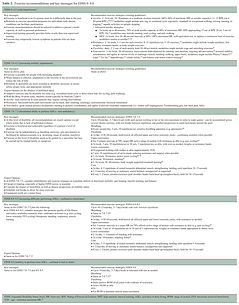
Click image to open PDF
Exercise Recommendations
LIFESTYLE PHYSICAL ACTIVITY RECOMMENDATIONS
The panel’s recommendations for lifestyle physical activity with MS also have been broken down by level of disability. Note: they forgot to highlight the EDSS level of 7.0-7.5 (active wheelchair users), but upon closer examination it’s just in the EDSS 5.0-6.5 section. In this guide you’ll find practical strategies like recommendations for daily steps, minutes of weekly activity, and more including advice on adaptive sports, seated yoga, and pressure relief (regularly lifting yourself off your wheelchair to prevent pressure sores).
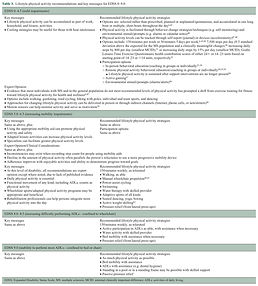
Click image to open PDF
Lifestyle Physical Activity
BARRIERS AND FACILITATORS TO EXERCISE AND LIFESTYLE PHYSICAL ACTIVITY
For its final review, the panel found that barriers to exercise are many. There’s your physical environment (access to facilities, transportation, the temperature/climate, etc.), your social environment (limited support from providers/family, the attitudes of others, etc.), your health condition (fatigue, symptom fluctuation, etc.), your cognitive/behavioral challenges (fear, frustration, depression, etc.), cost (gym membership, transports fees, equipment expenses), and time (a perceived lack of time). But they did identify ways to facilitate exercise, from the importance of peer support and role models to the significance of making exercise more accessible and the value of commitment. And this is where ActiveMSers comes in—an inspiring group of optimistic misfits as facilitators coupled with the most complete toolbox on the internet to make your exercise goals a reality.

Click image to open PDF
Barriers and Facilitators to Exercise and Lifestyle Physical Activity

TOP 9 FITNESS TIPS
If you don’t read anything else in this MS fitness guide, read this. After years and years of personal experience, ActiveMSers has narrowed its exercise recommendations down to these nine bits of advice. Follow these tips and you’ll be on your way to getting fit with a chronic illness.
1) Get motivated. Your journey begins now. But finding the motivation to exercise when you have a disability can be challenging. Challenging, but totally doable. Lean on your peers at ActiveMSers who regularly post on our forum their exercise successes (don’t miss MSers in Training!). Get inspired by my adventures in fitness through my personal stories that you’ll find throughout this website. And read this essential advice from our resident pro triathlete who explains how to find your motivation.
2) Stretch daily. Start here, say our PT advisors. Anyone can stretch. Flexibility exercises—muscle stretching and range of motion exercises (ROM)—can help prevent shrinkage or shortening of muscles and can help reduce the severity of spasticity symptoms. Dedicate at least 10-15 minutes of stretching every day, ideally multiple times per day. More stretching advice is here.
3) Experiment. MS affects everyone differently, so try different ways of exercising to see what works best for you, and be sure to pay attention to your physical environment. Seek out accessible, disability friendly venues. Swimming and walking are popular, as are horseback riding and biking (try a three-wheeled trike if balance is an issue or a handcycle if your legs don’t work). Give a go at yoga, tai chi, or Pilates, or even an exercise class for seniors (they are often free for those with a chronic disability). Work out to videos at home or circuit train at the gym. Adaptive ski programs can be a great way to enjoy the cool outdoors.
4) Stay cool. Heat, while it won’t trigger an attack, can exacerbate your MS symptoms, which can range from annoying to debilitating. Severe weakness and fatigue, anyone? Go to the gym when it’s cool, exercise in the morning, seek out air conditioning, consider snow sports, and put swimming (regardless of how you look in bathing suit) on your list. Use gear like cooling vests (we review and test them here) and cold packs, and don’t forget to down icy drinks. Indeed, a research study found that doing so can increase your exercise output by up to 30%.
5) Cardio is key. MS research (200+ studies and counting) continues to support the importance of exercise, especially cardio. Not only does it improve fatigue and overall quality of life, but also raising your heart rate may even influence the progression disease, decreasing both damage to the brain (fewer lesions) and brain atrophy, preserving cognition. Most critically, aerobic exercise can lessen the most infuriating of MS symptoms: dreaded fatigue. And yes, even if you are in a wheelchair, you likely can still do seated aerobic workouts. I rock from my tush daily.
6) Beat back fatigue: train in bursts. Upwards of 90% of MSers have fatigue issues, and that can be one huge barrier. How can you decrease fatigue by exercising when you are too tired to exercise?! Worse, fatigue or weakness can come on quickly, especially when doing the recommended cardio. This is how I do it. Space out your “hard” exercise with frequent breaks as needed. Break up exercise sessions throughout the day if you have to. High intensity interval training (or HIIT), where you sprint then rest then sprint then rest, has been shown in research to be incredibly effective. Here is ActiveMSers’ exclusive HIIT guide for MS. And bonus: it’s a huge time saver. Do it!
7) Stop it with the excuses. I know, I know, you’ve got good ones. I’ve already busted your fatigue blame game. While I’m at it, don’t let money be a factor. You don’t need an expensive gym membership (I have a Planet Fitness membership, which costs a touch over $10 a month). Therapy bands are dirt cheap, YouTube videos are free (or use your fave streaming service), and there are many free in-person programs listed on our forums (from chair yoga to adaptive swimming); select your region for available programs in your area. Not enough time to exercise? Puh-lease. You can get seriously fit even if you just dedicate 15 minutes. Prioritize you. Carve out time every day. You won’t regret it, I promise. (Miss a day or two or twenty? Get back on that exercise horse and don’t beat yourself up.)
8) Employ our exercise hacks. So this is a bit of a cheat, but I highly recommend reading my 5 ultimate multiple sclerosis exercise hacks. I know that makes this list closer to 13 things, but my list, my rules.
9) Remember, MS is BS: multiple sclerosis is beatable someday. Optimism when fighting a disease is essential to good mental health. You want to be ready when that cure comes—and I remain confident it will in our lifetimes—with the healthiest body and mind possible. You can do this. You can definitely do this. Don’t forget to frequently congratulate yourself on your accomplishments, monitor your progress (keep a diary!), and remind yourself to stay committed to a lifetime of better health.

PREP WORK
Before you start down the path of changing your life with the world’s best exercise routine, convincing yourself that you will crush it EVERY SINGLE DAY, there’s a bit of prep work you need to do. Because if you don’t, your epic fitness goals are going to implode before liftoff.
-
Start slowly. Nothing crashes a multiple sclerosis exercise program like going out full guns and wiping yourself out for a week. Easy does it, even if it means just a few minutes a day. Patience is key. Gains will come. A fellow MSer wrote me about going from 5 minutes of exercise a day to 50 minutes a day!
-
Listen to your body. With MS, it is easy to go over that fatigue edge. How can you tell if you’ve overdone it? If you still feel ucky and tired two or three days after your exercise, bingo, you’ve worked out too hard and need to dial it back.
-
Wear the proper shoes. If stability is an issue, you’ll want a tennis shoe that will maximize balance. If you are running, see a professional at a specialty running store to get the right shoe for you. Just walking? Still go to a running store. Running shoes are constructed far better than your budget walking shoe and can correct for overpronation (flat arches). If putting on sneakers has become a challenge, the Nike FlyEase is the company’s universal design shoe. I have a pair and they are great!
-
Let your clothes breathe. Synthetic performance clothing wicks moisture and keeps you dry. Traditional cotton breathes well and can help you stay cooler while you exercise. The benefit of synthetics is maximized if you are participating in outdoor sports where the breeze becomes your best friend (and potential enemy if you are wet). If you are doing seated exercises, also watch that your loose-fitting shirt doesn’t catch on the handles of your walker or wheelchair.
-
Invest in a fitness tracker. Researchers have found that people tend to walk more in a day (at least initially) if they are keeping track of the number of steps they take. The FitBit Inspire, which includes a heart rate monitor, is hugely popular. And if you wear a wrist monitor—the most common type—you can also track how active you are in your manual wheelchair, even if you never leave the house. Those little walks or rolls from the couch to the kitchen can add up!
-
Get the right adaptive gear. If you have foot drop, where your foot slaps the pavement and you scuff or stub that toe, consider investing in an ankle foot orthosis (AFO). The WalkAide and Bioness also ward off foot drop effectively. Research them here on our forums. Your PT will have the best advice as to what can help you exercise to your fullest capacity.
-
But don’t go crazy. Sometimes adaptive gear is more of a burden than it is an aid. If it takes you 30 minutes to prep for exercising, the odds drop that you will actually exercise. Just because you have a disability doesn’t mean that you have to spend a boatload of money to exercise. Be smart about it. Your body will tell you what it needs. If it needs more, give it more. Avoid letting your disability become a reason you don’t (or put off) exercise.
-
Stay close to home. The closer exercise opportunities are to your house, the more likely you are to partake. That also means less driving, fewer minutes out of your day wasted, and less stress worrying about fitting in a workout. Also, if you are in need of a gym, look for a fitness center with a pool, an appealing extra for MSers. And having a convenient bathroom not located 500 yards from the stretching mats is always a plus.
-
Consult a pro. Your health insurance will likely cover the initial cost of you seeing a physical therapist, who can customize an exercise program to your abilities and show you proper ways to stretch and workout. When you go to the appointment, be prepared with a succinct medical history, changes in the last three months (are you in a flare?), personal goals (climb stairs, stand to cook dinner, etc.), current issues, recent falls (how many, how did it happen?), and list of questions. Be honest with your PTs and for gosh sakes listen to them. If they say “use a cane” then do it.
-
Research local MS/disability programs. There are multiple sclerosis societies worldwide and many of them offer exercise programs and classes geared to those with MS or other disabilities. They are often free or at a steep discount. Give them a try; you might meet some great new friends and get fit to boot. It’s also nice to know everyone is in the same boat trying to paddle.
-
Alternate strength/cardio training. To keep fresh, try not to strength train the same set of muscles on back-to-back days (although abs are usually okay). I switch off between arms and legs. If an area still feels fatigued a couple days after exercising, give it an extra day or two. When it comes to intense cardio like high intensity interval training, two to three times a week is the sweet spot. Daily HIIT is not recommended.
-
Remember the meds. You might need to work your exercise program around your medications. Interferons, for example, can make some folks feel icky the next day. Plan around your icky times—don’t just plow through them. Also speaking of meds, as good as exercise is for your MS, it does not replace a disease modifying therapy. Do both. Better yet, add a healthy diet to the mix, too.
-
Sometimes dial it back. If you are battling a relapse, take it easy on the exercise front. Yes, you can still exercise, but be smart about it. Ratchet back the intensity and focus on maintaining fitness rather than building. Slowly work your way back up.
-
Keep an exercise diary. This is something many have found extremely helpful. Tracking your progress will help you celebrate the good and highlight areas where you might need help. Plus, when it feels like you aren’t making gains, you’ll have a record to prove yourself wrong. And be creative in what you monitor. When I started stretching, I noted that I could barely touch my knees. Then below the kneecap. Then the shin. The ankle. Then the toes!!
-
Stop procrastinating. Good intentions don’t count. Promising to start after the New Year, or your birthday, or next month doesn’t count. Reading these tips and not acting on them doesn’t count. Start. Right. Now. Literally, right now. Shrug your shoulders, pulling them up to your ears, hold for a few seconds, then release. Repeat twice more. Bingo, you are already on the way, piece of cake! No wait, forget I even mentioned cake. But now that you’ve started exercising, keep it up.

EXERCISING AT HOME
The best place to exercise is often the most convenient place to exercise: your own home. You don’t need a personal gym or to spend gobs of money on exercise equipment. Here are some tips to get started smartly and affordably.
-
Lie down in front of the TV. Seriously, roll out a yoga mat and get to work on the ground. Watch some silly reality singing or dancing show and do floor exercises to the music. Abdominal exercises are obvious, but there are gobs of other exercises (and stretches) that can be done from your tummy or on your back.
-
Sit down in front of the TV. No, not on the couch. Sit on an exercise ball or a Bosu. That imbalance will force your abs to work even though your brain is focused on that delicious-looking dish on Top Chef. But be careful and don’t roll off and crack your head on the corner of the coffee table.
-
No really, sit down in front of the TV. There are gobs of exercises you can do seated on your couch, walker or wheelchair. Gobs. Search for seated exercise programs on Google and go to town. I’ve been doing seated or chair exercises for years and it’s kept me incredibly fit. But since I prefer working out more intensely, I usually just follow standing hardcore exercise programs and modify them to fit my disability.
-
YouTube, Netflix, Amazon Prime, Hulu, Cable, etc. For at-home exercises, your fave video service almost certainly offers exercise programs for free on demand. You’ll find everything from yoga to boot camp to HIIT. On YouTube, it’s hard to beat Jessica Smith and her dog Peanut.
-
Go MS Specific. There are exercise video programs that are MS specific. You can try the 30-day MS Exercise Challenge from Healthline for free. There are also a bevy of other programs with a wide range of intensity if you go a-searching. Some I like, some go too slowly, and some have more talking than actual exercise. Find what works for you. The most popular virtual MS exercise programs (fee-based) are listed here in our forums.
-
Dis drop foot. That’s when your foot “drops” when you walk, causing you to stub your toe and trip. You’ll want to work out that muscle on your shin, also called the tibialis anterior. You can do it sitting down: keep your heels to the ground and lift your toes. You can also try walking on your heels (better be careful you don’t fall) or use equipment at the gym that targets that muscle.
-
Do your homework. Working out at home is cheap, convenient, and darn easy. Since MS can make even getting out of the house tricky at times, take advantage of staying in (where you can regulate the temperature yourself) and doing what you can. Some light free weights (a set coated with neoprene prevents damage to your floor and noggin), a set of resistance bands (we recommend Therabands), and a yoga mat (we like this one and this one) can make all the difference. If you have the room, the oversized mats from Square36 are fantastic. We use the 8x6 cardio mat (more durable and shoe-friendly than their yoga version) almost daily.
-
Stretch on a table. You've probably seen or experienced the oversized elevated physical therapy mat tables, some that lift electronically. They cost thousands, and even non-mechanical ones run upwards of a grand, take up gobs of space, and are heavy. But this portable/foldable mat platform from Saloniture might be just the ticket if you have trouble getting off the floor. Plus you can stick it in a closet when not in use. It is now a staple in my home gym.
-
Gear up. If you want to beef up your home gym, initial temptations are to invest in a seated cardio machine that works both your upper and lower body, like the NuStep or PhysioStep. The problem? They can run into the thousands of dollars, which is budget busting for many MSers. I recommend considering an air/fan stationary bike (Schwinn Airdyne bikes are the gold standard). If down the road the saddle is too high to mount, you can still work your arms from the front of the bike from a seated position (wheelchair or walker). Plus the fan offers built-in cooling. A win, win!
-
Take advantage of your surroundings. Your house has lots of natural supports beyond its walls, from doorjambs and hallways (perfect for two arms) to couches, chairs and doors. I rarely did any standing stretches without firmly planting my hands on something solid.
-
Play video games. There are older video game systems, like the retired Nintendo Wii (you can find used versions on Amazon), that will help challenge you to get and stay active. They also may improve strength, endurance and balance. Alas, you will likely have to go the used route and these platforms have been retired.
-
Train your brain. Remember that no matter how you feel, exercise will not make your MS worse (although it could temporarily amplify your symptoms). If it’s not a good day, take a break and remind yourself that tomorrow is around the corner. Exercise your brain instead: do a crossword or Sudoku.
-
Use caution. While they are extremely affordable, resistance bands can be hazardous if you have severe spasticity (muscle tightness). Take care when using them—you absolutely don’t want to tear any muscles trying to exercise. Also, make sure your exercise space is clear and open. Tripping on a throw rug is decidedly not fun.
-
Brush your teeth. And while you are doing that, work on your balance by standing on one foot (be sure to hold onto something to start). Want to flex your brain? Use your non-dominant hand to polish those pearly whites.
-
Write your ABCs. With your feet. Sit on the edge of the bed and write out the alphabet using your feet. This exercise helps with proprioception, or knowing where your body is in space.

AT THE GYM/POOL/STUDIO
Venturing out of your house to your neighborhood gym or pool can be just the ticket to jumpstart your fitness routine. Before you do, here are some tips to help maximize the experience when you have a disability or chronic illness.
-
Time your parking. Gyms are notorious for filling up handicapped parking spaces due to seniors working to get in shape, too. If finding a spot is tricky for you, check the class schedule and avoid going to the gym during times when classes for senior citizens are being held (unless you are in the class, of course!).
-
Ask for a discount. Many fitness centers and ski areas offer deep discounts to those with disabilities or diseases. If it means saving a few bucks, don’t be shy about busting out that MS card. If anyone asks, I keep a note in my glove box… or I just awkwardly walk or wheel for them. Ha!
-
Get an exercise buddy. Some of us can get motivated to exercise just by putting on sneakers, while others might need a bit more prodding. With a taser. Research and personal experience has found that enlisting someone to exercise with regularly does wonders and helps keep both of you honest. This is especially helpful at the gym. Virtual buddies work too!
-
Look up to stay cool. Before you start working out on a cardio machine, look up. You’ll want to park yourself closest to the ceiling fans, floor fans, and/or air conditioning vents. If it is winter, you’ll want to avoid areas that blow hot air.
-
Check your ego at the door. No, maybe you can’t perform like you once were able to. And while that can be immensely frustrating, it’s better to put your ego in check and just get to working out doing what you can do today, not wishing for what you could do yesterday. But if it makes you feel better, go ahead and move that weight pin down a few notches after you finish your set, I won’t tell.
-
Use the facilities. Incontinence problems are common with MS. Use the bathroom before exercise and if you feel that urge during your workout, you know the drill. Stop and get to a restroom. Don’t try to finish those last four minutes on the elliptical machine. And stretching often wakes up a sleeping bladder—you’ve been warned.
-
Stretch before and after. Don’t rush into your workout. Limber up your body by slowly warming up. After your exercise session, take time to cool down with 10-15 minutes of stretching. Another trick: choose a mat position near a beefy piece of equipment that you can grab onto. It makes getting onto the floor and back up again much easier.
-
Class work. The best programs for flexibility and balance include yoga, tai chi, and Pilates. They are taught at many gyms and private studios. Try each one and see what you like best. Not only are there many that accommodate people with disabilities, but also lots are tailored specifically to those with mobility issues.
-
Serious class work. As active MSers—emphasis on active—if you feel game, try something a bit harder. Like CrossFit or hit the dojo for some martial arts training. Explore your local climbing gym. Find your jam. Because when you do, exercise ceases to be “exercise.”
-
Get thee to thy ballroom. Tisha, a fellow ActiveMSer, swears by ballroom dancing. Makes sense, because your dance partner can add stability even if you have two left feet like me. Plus, it’s a heck of a lot easier than the Hokey Pokey. Stick your left foot out and shake it all about? Unless you want dance floor carnage, dream on!
-
Pretend you’re a senior. Exercise classes geared for senior citizens are usually at a slower pace, ideal for the MSer with strength and/or mobility issues. Don’t be shy—you’ll be friends with your new classmates in short order.
-
Inform your instructor. Whether you are taking a yoga or Pilates class, it may help to let your instructor know about your multiple sclerosis. He or she likely will have ways to modify poses and exercises to better suit your ability. I recommend choosing a spot near a wall—or better yet, a corner so you can grab two walls!
-
Break out the walking aids. Exercising causes your body to produce heat and heat exacerbates symptoms. For many of us with MS, that means walking may get a little more challenging. It makes no sense to work out trying to stay healthy if you fall and bust your hip because you were too vain to use a cane or a walker. You absolutely do not want to be put out of commission for months, so if you need a walking aide, use the darn thing.
-
Or wheelchair. I have no problems using my wheelchair in the gym, although sometimes equipment may need to be moved. While I’ll often transfer on to many weight machines, there are weighted pulley systems that can be operated right from the comfort of your wheelchair. I’ll often park it there for 15 minutes so I can work my arms like a champ.
-
Seek support. Exercise machines that offer support, like upright or recumbent bikes, tend to be more comfortable and safer to use (especially if you have balance and coordination issues) than those machines that require your full body weight like treadmills. That said, weight-bearing exercises help improve balance and prevent osteoporosis, a common complication of MS, so try to mix them in.
-
Mix it up. If you do just one cardio exercise or stick to just a few weight machines, that’s fine. Fortunately, research has found that sticking to the same routine will still get you healthy. But researchers have also found that to be BORING. We recommend tweaking your program to keep your body on its toes and your motivation at its peak.
-
Amp up the cardio. An easy trick to maximize your aerobic work is to limit your time between exercises to maintain a higher heart rate. Right after pumping up your biceps, jump to triceps. And since I have no problem calling attention to my dorkiness, if I stay on one set of equipment for multiple sets, I’ll virtual “run” between sets (pumping my arms quickly) to keep my heart rate up, maximizing my time.
-
Drink frequently. Cold water does two things brilliantly. First, it hydrates you, which is important when you are sweating off liquids. Second, researchers have found that people with MS can exercise longer and harder when they take frequent drinks of icy beverages.
-
Put the phone down. That ding is not that important. That Facebook update telling people you are exercising is not that important. That perfect song is not that important. (Exception: if Nickelback comes on, gah, skip that song immediately.)
-
Go longer by going shorter. If body parts don’t fully cooperate, shorten your workouts by making them longer. Huh? Let’s say your legs turn to rubber after 20 minutes of riding the stationary bike. Then take a break after 10 minutes and do a seated punching routine for a minute or two. Then pedal again for a few minutes, rest the legs, and go back to doing your your best Ali. Repeat until you get your full time on the bike, plus all the extra cardio of air boxing.
-
Get wet. The best part about exercising in the pool is that you can work your body in so many different ways. Swim laps, participate in water aerobics, or get creative and invent your own ways to get your body moving (throw a Nerf ball and then swim after it).
-
Seek pool temps of 80-85 degrees. Some pools can get over 90 degrees, which will do your MS no favors and ramp up symptoms. Pools tend to be coolest in the early morning. If your local pool is too hot, it can’t hurt to ask to turn the temp down.
-
Use the bathroom first, really. I’m just going to remind you that life turns to a blur when Mother Nature calls in the middle of a water aerobics class and you are far, far away from the pool’s exit, and even farther way from the bathroom. That said, there is an average of 8 gallons of pee in a public pool, so, uh, yeah.
-
Count to 30 (or longer). If your body is anything like mine, my leg strength wanes after doing 10-15 reps of leg weights or doing cardio leg work. Give your legs a chance to recover before popping up to the next machine to lower the risk of falling. After cranking on the elliptical, I’ll sit back and rest, cooling down for a few minutes. Someone wants to work in? Tell ‘em to wait.
-
Scout a path. If you are a bit wobbly on your feet, before you start walking from one piece of equipment to another, scout a clear path ahead of you and look for grab points so you can catch yourself if you start to teeter.
-
Adapt your workout. Some days the legs don’t want to cooperate, so exercise your arms. Fatigue is running you down? Avoid heavy cardio. Your legs no worky? Then do that arm spinny cardio thingy. While it might not be dazzlingly entertaining, it works up a sweat.
-
Modify, modify, modify. Many fitness machines can be used in creative ways to work around your disabilities. For example, maybe you can’t safely use an elliptical machine because your legs are too uncoordinated. Then maybe try straddling the machine and just use the arm portion to get your cardio on.
-
Monopolize a machine. Normally this would be poor gym etiquette, but if you are in a chair or mobility is a serious issue, screw etiquette. It’s best to grab a machine that does many different types of exercise and unapologetically hog it. That will minimize the need to move around, maximizing your energy for your MS fitness routine.
-
Use toe straps or wear bike shoes. With my feet pretty numb, wearing toe straps while I bike keeps my legs from flying off the pedals and allows me to go at a faster cadence. Some exercise bikes work with bike shoes, which are even better than simple straps and my number one choice when they are available.
-
Choose wisely. If you lose strength doing cardio exercises, making yourself unbalanced, you’ll want to work out at the “ends” of the gym, so you can reach a wall or a place to sit easier instead of having to navigate behind a two dozen treadmills immediately after your workout.
-
Chat it up. This sounds counterintuitive. You are at the gym to work out, not talk, right? Yes and no. Having MS can be socially isolating, and fellow workout partners who you see regularly can become a second family, which is good for the soul. Put your tunes on pause for a moment, be friendly and learn their stories. These are your teammates. If they ask about your disability, fill them in.
-
Ask for help. Don’t be shy. Whether it’s carrying free weights when your balance is off or adjusting a stubborn, sticky piece of equipment when finger dexterity is wonky, there are times when you need to ask the nearest buff person for a little assistance. (Avoid asking a grandparent to lug a 50-lb dumbbell unless he or she is pretty darn fit). They’ll gladly help.
-
Wash your hands. With the amount of people in the gym smarming the exercise equipment, it’s smart to wash your hands frequently, especially after your workout (and before you get in your car). Don’t touch your mouth or nose or eyes. Getting sick while you have MS can trigger an attack and good hygiene is the number one way to avoid colds. Plus there might be a global pandemic going on.

THINK OUTSIDE THE BOX (ACTUALLY, JUST THINK OUTSIDE)
We’ve given you tips for exercising in your home and exercising at the gym. But my favorite place to exercise is in the fresh air. You also get your Vitamin D, unless you happen to live at one of the earth’s poles and it’s wintertime. In that event, say hi to the polar researchers and Santa.
-
Take a hike. Walking and hiking are excellent low-impact exercises if you are capable. Try playing games when you’re walking in your neighborhood, like counting dogs, lawn ornaments, or rating landscaping on a scale of 1-10. Here are some dynamite walking tips.
-
Go biking (or triking). And you thought having a tricycle was only for those five and younger. Today’s three-wheeled bikes are a different breed and perfect for those of us with weaker legs or balance issues. Their stability is unmatched. I personally have a handcycle, which allows me to go much farther and faster due to my wonky legs. Refer to my cycling guide for more advice and tips.
-
Get a leg up. Recent studies have shown that upper leg endurance exercises (quads and hamstrings) can indeed enhance walking ability. Yes, they may make you walk worse in the short term, but they will benefit your walking in the long term.
-
Hit the slopes. Winter sports, such as skiing, snowboarding, adaptive skiing, ski biking, and even curling are good options if you have multiple sclerosis. Also ice skating and hockey (the sit-down version is known as sledge hockey) are brilliant for staying in shape. You stay cool and all of these activities allow you to go at your own pace.
-
Play tennis or shoot hoops. Even if your legs don’t work, there are likely wheelchair programs for both tennis and basketball in your area. Even better: you’ll meet a new group of determined individuals. I recommend using specially designed chairs, as your typical wheelchair is a tip hazard. And if you are wondering why I didn’t mention Murderball, aka wheelchair rugby, it’s only because I’m chicken.
-
Take advantage of mornings. The a.m. has several advantages for MSers. First, it’s usually the coolest part of the day. Second, you are most likely to be fresh earlier in the day (fatigue tends to be worse mid afternoon). Third, you can check off exercising from your to-do list before its lunchtime! Cool evenings are also a welcome respite from the midday sun.
-
Hop on a horse. A number of MSers give thumbs up to therapeutic riding or hippotherapy. There are likely programs in your area that are geared to the total beginner. And if you are an experienced rider and miss it, well, get back on that horse!
-
Try water sports. Anything on the water tends to be cooler than on land. The world is your oyster, so try scuba diving, snorkeling, surfing, kayaking, whitewater rafting, canoeing, water volleyball, water basketball, water Frisbee, well, you get the idea.
-
Walk down your driveway. Just get outside and soak up a little Vitamin D. Work on balance and fire new muscle groups by walking on your heels, on your toes, sideways, backward, and up and down hills. March with knees high or with straight legs also builds strength and coordination. And while you are outside, could you pick up the mail?
-
Be creative. There are hundreds of ways to work your body, from golf to hang gliding to paintball to spelunking. Let your mind wander and don’t be afraid to try something new. You just never know what kind of passion you’ll have for a sport until you’ve tried it. Can’t wait to throw me some axes!
-
Go gray. Community senior centers often offer exercise classes—exercise classes you can take as someone with MS or a chronic illness. As someone with a permanent disability, you don’t have to be a senior. So take advantage of them! They are affordable and move at a slower pace, which is perfect if you are moving a little slower.

ANYWHERE, ANYTIME
There are some good habits to adopt no matter where you are working out. And I’m sorry, taking a vacation does not mean taking a vacation from exercising. Staying fit is essential to your health, so it should remain a priority wherever you are in the world.
-
Wear a cooling vest. ActiveMSers has a detailed buying guide of cooling vests, which can help tame symptoms brought on by heat. It’s a great way to stay cool both outdoors and indoors. MS research suggests precooling before exercise can be as beneficial as cooling during or after exercise.
-
Towel off. No, I’m not talking about a dry towel. Soak a towel in ice water, wring it out, and use it too cool down regularly during exercise. Cheap and effective!
-
Hold your stretches. For stretching to have some level of therapeutic effect, you need to hold your stretches for at least 15 seconds, which will help maintain flexibility. To improve flexibility, hold your stretches for 30-45 seconds. Stretching should not be painful.
-
Air it out. Do your legs not work right? Then get your cardio by working your upper body doing “air” exercises, and you can do it anywhere. Air box (jabs, upper cuts, round houses), air drum (don’t forget the cymbals!), air sprint (do your best Bolt) all while seated. I’ll even toss in referee exercises—touchdown!, intentional grounding!, roughing the kicker!—to mix it up. Yeah, I look an idiot, but if anyone says anything, I’ll flag them for unsportsmanlike conduct.
-
Use trekking poles. Their benefit when hiking is obvious, but trekking poles also allow you to work your upper body when walking on pavement, even though you may get some strange looks. And if your walking gets sketchy after a long stretch, those poles are amazing at keeping you upright.
-
Core focus. You use your core muscles every day, yet it is so easy to overlook in an exercise program. Make a point to work your core including your abs, which is the one muscle set that can take daily exercise. A strong core also is critical for balance.
-
Get into the beat. An MS study on walking found that people were able to walk with more coordination if they walked to a predictable beat. Now walking around with a metronome might prove a bit impractical, so perhaps try finding music that gets you into a steady walking rhythm.
-
Turn up the tunes. Studies have shown you work out harder and longer if you listen to music (especially if it’s loud). I prefer up-tempo music when I’m doing cardio work and something a bit more chill when cooling down and stretching. This might sound crazy, but Zumba music—while sometimes unbelievably annoying—has the right tempo. Studies have found Eminem, yes Eminem, is dynamite for extracting maximum effort.
-
Use your ears. If eyesight is an issue (or even if it’s not) and music doesn’t rock your boat, listen to audible books while you exercise. You’d be amazed at how time flies in the middle of a suspenseful novel, even if you hate that darn exercise bike.
-
Get a partner. Beyond a gym buddy, it’s always more fun to work out with another, regardless of activity. Enlist your significant other, a friend, or a fellow MSer (heck, post on our forum that you are seeking a workout partner). If you’ve got a partner in fitness, you can legally endlessly harass each other if one skips a workout.
-
Drink a slushy. Actually, any cold drink will help you stay cool, but the icier the better. Also hydrate yourself regularly throughout your workout instead of at the end all at once to maximize cooling. You may want to experiment with sports drinks. I’ve read that they’ll hydrate you well and potentially lessen the need to urinate mid workout. But I haven’t done an extensive “how bad do I need to pee” test to confirm this.
-
Vacuum the house, wash the car. A clean carpet and a shiny automobile are welcome additions to one’s life, and the effort burns calories and gets you moving, all important. But note that research has shown that while the activity is healthy, it doesn’t provide the same benefit as concerted exercise. Sorry. But cleaning your home and vehicle is still rewarding in its own right, so there’s that. Wax on, wax off!
-
Don’t try—do. Yoda was onto something when he said this. Don’t beat yourself up if you are not as successful physically as you once were. That’s life with this disease. Do what you can, and keep doing. Don’t just try and then stop. It’s okay if you miss a day or a week or even a month. Just get back to it and power on. Tomorrow is a new day.
-
Stop comparing. Do what you can do. Don’t compare yourself to friends, to other MSers, to your snotty super-fit sister, or to the old you. Especially the old you. Exercise for yourself and your health. I learned the hard way.
-
Do it with intention. When you commit to exercising, commit. Don’t half-ass it. Bust your rear end and avoid distractions. This is your time to take care of your body.
-
Enjoy a break. Every exercise guru suggests you take at least a day off every week to give your body a full 24 hours of rest. You deserve it!
There you have our best recommendations and advice for exercising with multiple sclerosis or other disabilities. For more on exercise with MS, check out our Guides for HIIT with MS (High Intensity Interval Training) and Cycling with MS.
Last updated January 21, 2022